
We deal with a new information technology generation that involves big data, internet of things (loT), cloud computing, and artificial intelligence to transform the conventional medical practices in an all-round way, making healthcare more efficient, more personalised, and more convenient. Smart healthcare services like smartHealth and smartTelehealth are utilising the technology that leads to better diagnosis, well-organised treatment plans, and devices that improve life quality, which can be adapted and are cost-effective.
At smartData, we understand that to keep pace with the technological advancements, the essence of reusability and scalability is manifold. On similar lines and using the latest technologies, we have built components of clinical care solutions that help health organisations and providers to manage their practice requirements efficiently. Our smartHealth solution is a SaaS-based platform for organisations with multi-locations that includes the following major features:
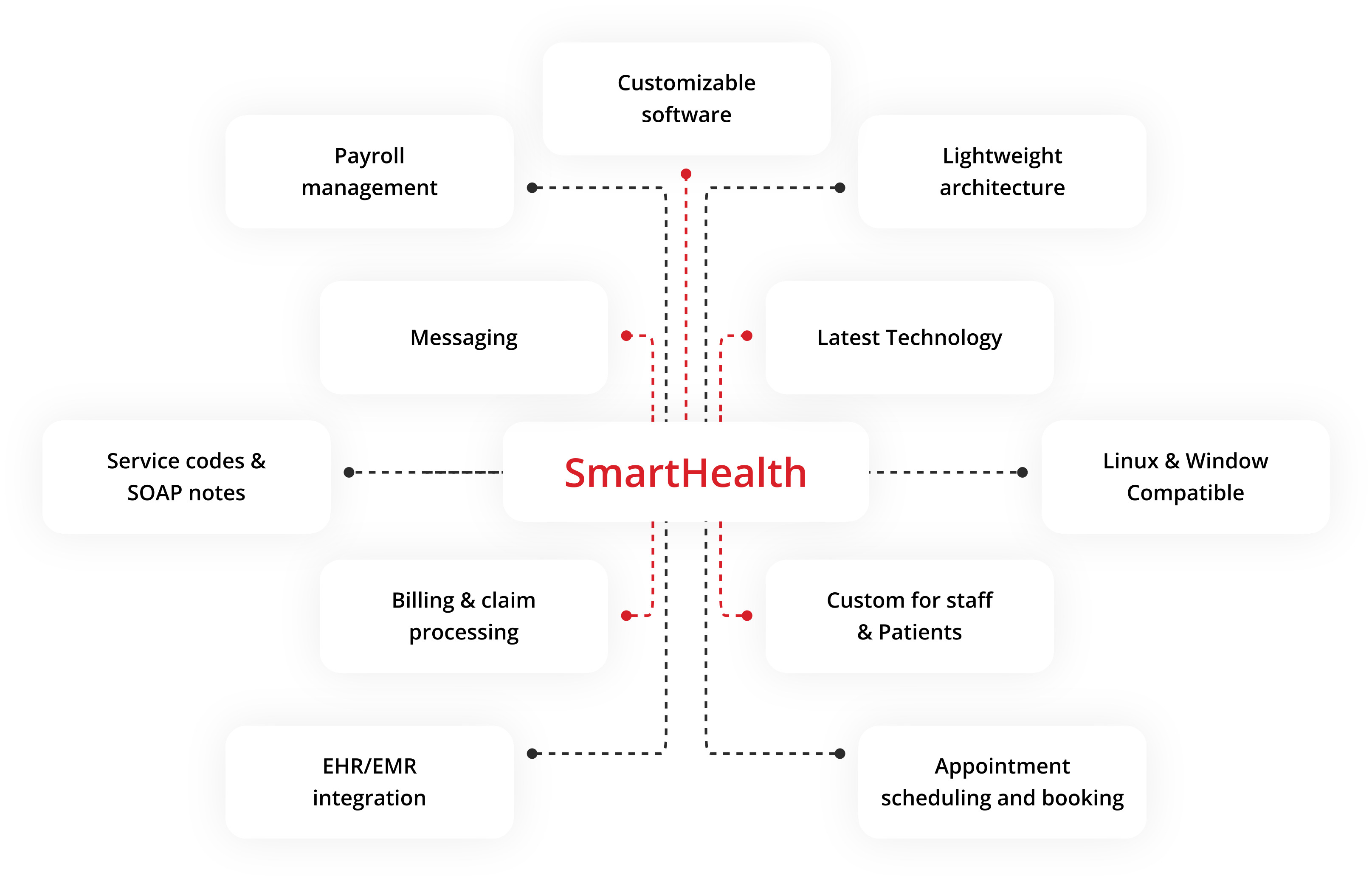
smartHealth- components of clinical care solutions | Telemedicine-EHR
Patient Self-Management Solution – A lifestyle support tool that enables individuals to manage chronic medical conditions such as blood pressure and blood sugar levels.
"Save Now, Buy Later" (SNBL) is a financial solution designed to help users build savings while earning rewards. The platform allows users to set up flexible savings plans through scheduled installments, lump-sum deposits, or round-up savings. In return, users receive cashback rewards, which are added to their savings and can be used toward future purchases.
For businesses, SNBL functions as a customer acquisition and retention tool. It integrates with existing sales channels to offer a predictable revenue stream and encourages brand loyalty. With plugins for WooCommerce and Zid, users can create branded wallets and deposit funds directly with participating merchants.
The primary objective of this project is to design and implement an event-driven backend system that automates the generation, validation, and delivery of healthcare-related EDI (Electronic Data Interchange) files, such as 834 (Eligibility and Enrollment), 837 (Claims), and 835 (Remittance Advice). These files are essential for secure, standardized, and compliant data exchange between healthcare providers, payers, and regulatory partners.
This system aims to: